A great venue is hard to build. A great venue's hospitality website is harder. But the hardest, and the most overlooked, is the system that runs between them, the layer where reservations meet operations meets memory.
The phone is the first system.
Every venue we audit has a phone-as-database problem. Reservations live in someone's head, events live in a notebook, the deposit policy lives in a WhatsApp thread between the owner and the floor manager. It works until it doesn't, and "doesn't" usually means a Saturday night double-booking that costs four covers and one regular.
"If your reservation system is a person, your scaling ceiling is one person."
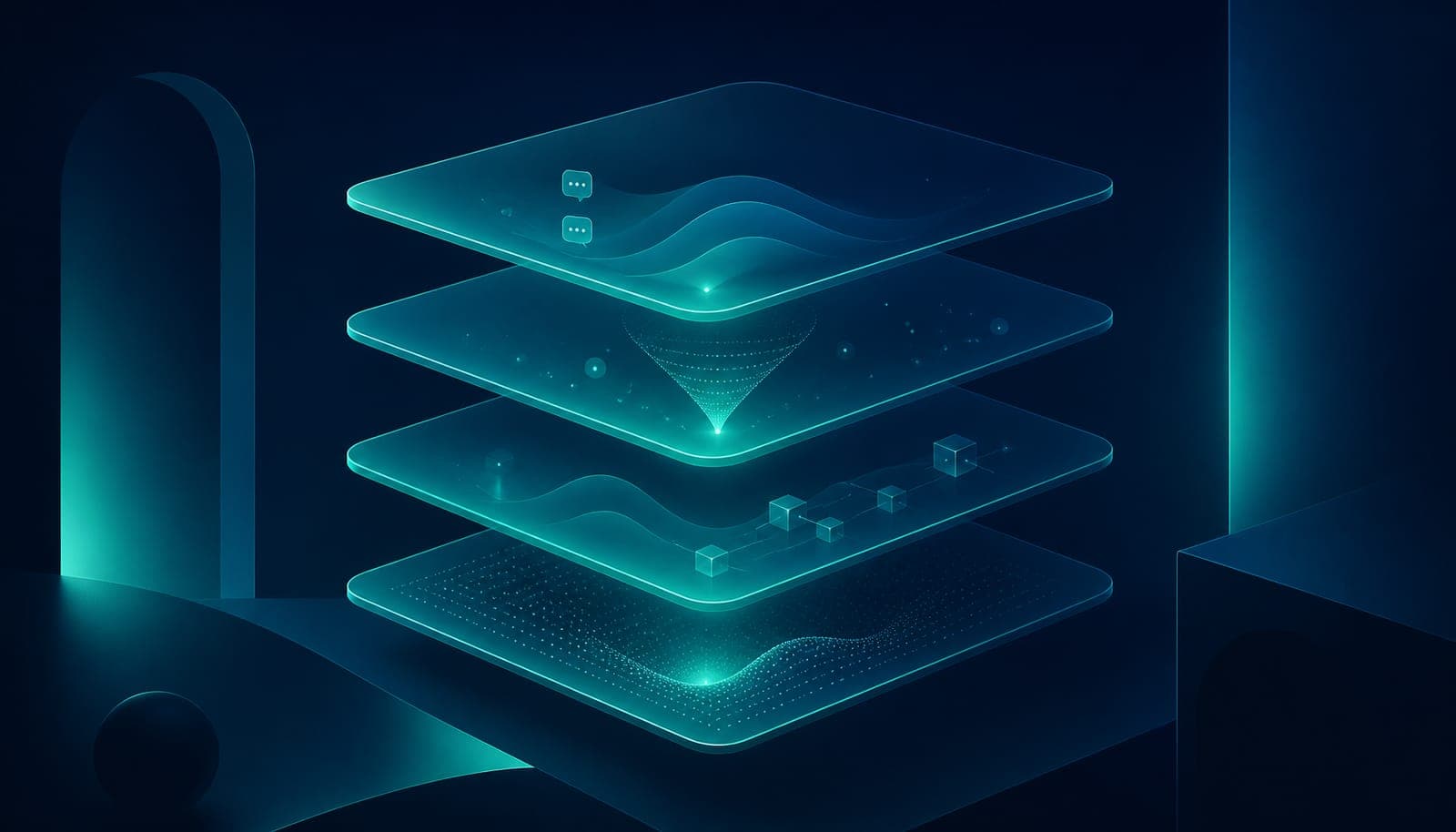
The four layers of a real hospitality stack.
Every venue that runs well, runs on the same four layers, even when the owner can't name them. Most digital agencies sell you layer one and call it a website. The real work is the next three.
01. Communication.
Website, local SEO, Google Business Profile, the small social surfaces. This is the layer everyone sees, and it's where most venues stop. The work here is editorial, the site should read like the room feels, and it should load fast enough that a person doesn't bounce before deciding to walk in.
02. Conversion.
Reservation flow, event inquiry, private hire request. Conversion is where the wheels usually come off. The form is too long, the confirmation never arrives, the inquiry sits in someone's inbox for two days. We aim for a 30-second reservation and a 48-hour inquiry SLA, both automated.
- Three-field reservation: party size, date, time. Phone optional.
- Automatic confirmation in under 60 seconds.
- Pre-qualified event inquiry with routing rules.
03. Operations.
Calendar, capacity, staffing, deposits, follow-ups. This is where hospitality tech usually feels heavy, because most platforms are built for chains, not for one beautiful room. The fix is to lean into smallness: a tight calendar, a clear capacity rule, an automatic deposit handler, a 24-hour follow-up.
On Incontro Bar, the aperitivo venue whose website Morvion built, reservations, events, a light CRM, the CMS and email automation run behind one site the owner manages.
04. Memory.
Guest history, preferences, return cadence. The thing every great maître d' does in their head, and the thing every venue forgets when they lose that person. The memory layer turns one-time visitors into regulars and regulars into hosts.
At the platform tier, the same four layers compose differently. Dreilokale, the Swiss marketplace platform Morvion built end-to-end, carries the operations and memory layers on a request flow, a matching engine, a CRM and email automation. Same architecture, different shape.
The smallest version of right.
You don't need a six-month build. You need the smallest stack that connects all four layers:
- A website that loads in < 1.5s and books in < 30s.
- A reservation flow that confirms automatically and follows up the next day.
- An events form that pre-qualifies and routes to the right person.
- A monthly retention loop based on actual visit data.
What not to build.
The mistake we see most often: a venue, three months in, asking us to build a loyalty app. The answer is almost always no. Apps don't retain hospitality customers, rooms do. The digital stack should quietly make the room work better, not pull the guest out of it.
For the long-form reference architecture, cost bands, and the 12-question self-audit scorecard, see the public Morvion Hospitality Digital Stack Report. Patterns for single venues, multi-venue groups, and event-location platforms, with Incontro Bar and Dreilokale as the worked examples.
Run this with us.